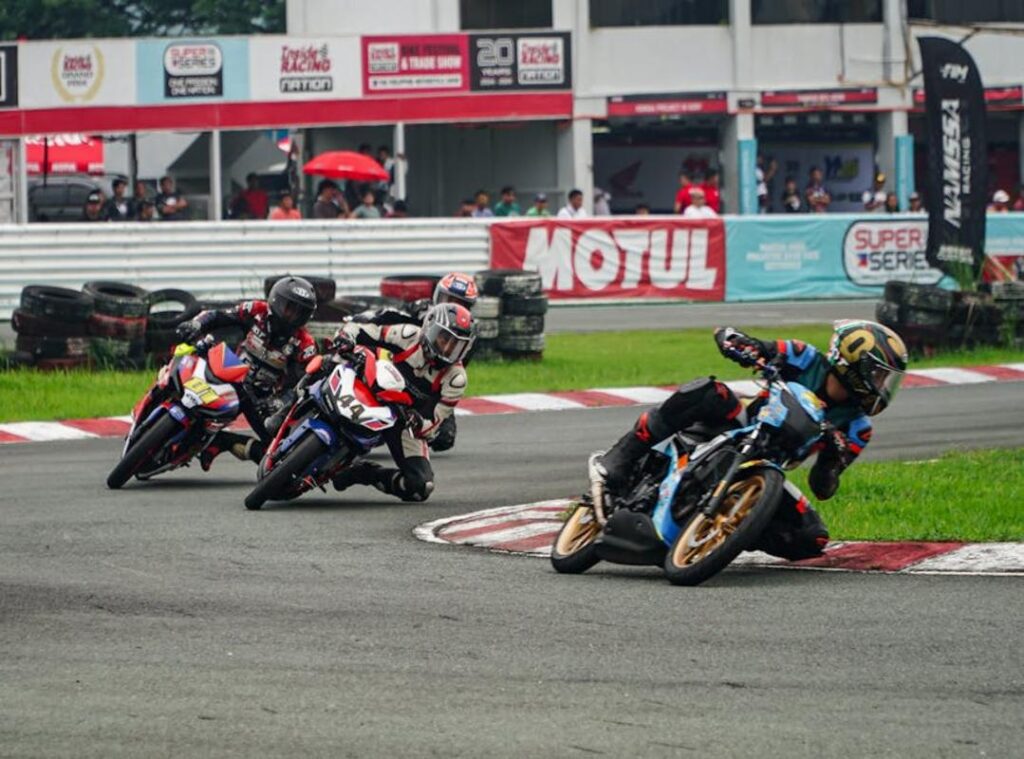
I know what it’s like to twist the throttle on a public road and immediately back off because you see a car, a pothole, or a cop around the next corner.
Your bike has so much more to give. But the street isn’t where you find out what that is.
Track racing fmbmotoracing events give you what public roads can’t: space to actually ride. No traffic. No speed limits. No gravel in the apex.
Here’s the problem most riders face. You bought a machine built for performance but you’re stuck using maybe 40% of it. The rest sits there because using it on the street means risking your license or worse.
I’ve spent years building track events that let you experience what your bike can actually do. These aren’t chaotic free-for-alls. They’re controlled, organized sessions where safety comes first and adrenaline comes second.
This guide walks you through everything about our track events. What happens on your first day. How the sessions work. What skill level you need (spoiler: any level works). And exactly how to sign up.
You’ll learn what to expect before you even pull into the paddock. No surprises. No confusion.
Just you, your bike, and finally enough room to see what both of you can really do.
What Makes FMB Track Events Different?
You’ve probably heard people talk about track days.
Maybe you’re curious. Or maybe you think it’s just for racers with $20,000 bikes and full leathers.
Here’s what a track day actually is. It’s a non-competitive event where you ride on a closed course. No traffic. No stop signs. Just you, your bike, and the pavement.
But not all track days are the same.
Some people say track days are too intense for regular riders. They think you need years of experience before you even show up. And sure, that mindset keeps things exclusive.
But that’s not how we do it at fmbmotoracing.
I built these events around three things: inclusivity, safety, and structured progression. Because here’s what matters. You don’t get better by staying in your comfort zone on public roads. You get better when someone shows you the right way to brake, turn, and accelerate in a controlled space.
It’s not about racing. It’s about becoming a more confident rider.
The riders who show up? They’re not all on superbikes. I’ve seen people on 300cc bikes outride guys on liter bikes because they understood the fundamentals. (Skill beats horsepower every time.)
What really sets track racing fmbmotoracing apart is the atmosphere. People actually help each other. You’ll see someone offer advice on body position or share tire pressure tips between sessions. That’s rare.
Pro tip: Start in the beginner group even if you think you’re intermediate. You’ll learn more and have way more fun.
You’re not just signing up for track time. You’re joining a community that wants you to improve.
Find Your Pace: Rider Skill Groups Explained
You show up to your first track day and someone asks which group you’re in.
You freeze.
A, B, or C? What’s the difference? And what happens if you pick wrong?
Here’s the truth. Picking the right group isn’t about ego. It’s about safety and actually learning something.
Some riders say it doesn’t matter. They’ll tell you to just jump in wherever and figure it out. That you’ll naturally find your pace.
But I’ve seen what happens when a beginner ends up in the advanced group. It’s not pretty. They’re white-knuckling every corner while faster riders blow past them. Nobody learns anything and everyone goes home frustrated.
The group system exists for a reason. Let me break down what each one actually means.
The Novice Group (C Group)
This is where you start if you’re new to track racing fmbmotoracing.
First-timers belong here. So do riders who’ve done a track day or two but still feel unsure about the basics.
The focus is simple. Learn the track layout. Understand proper lines. Figure out where you’re supposed to be.
You’ll have instructors available. Use them. They’ve seen every mistake you’re about to make.
Passing rules are strict. Straights only. No dive-bombing into corners. No surprises.
The pace feels slow at first (and honestly, it might be). But that’s the point. You need time to build muscle memory without worrying about someone on your tail.
The Intermediate Group (B Group)
You’ve done a few track days. You know the layout. You’re not thinking about where to go anymore but how to go faster.
This is your group.
The pace picks up here. Riders are working on technique. Braking points. Throttle control. Body positioning.
Passing rules relax a bit. You can pass in designated zones beyond just the straights. But it’s still controlled. Still predictable.
Think of it like this. C Group teaches you the alphabet. B Group is where you start writing sentences.
Most riders spend the longest time here. And that’s fine. There’s no prize for rushing to A Group before you’re ready.
The Advanced Group (A Group)
Seasoned track veterans. Licensed racers. People who’ve been doing this for years.
The pace is significantly faster. If you’re wondering whether you belong here, you probably don’t yet.
Passing rules are more open. Riders can pass almost anywhere as long as it’s safe and predictable. Everyone’s expected to hold their line and communicate through body language.
But here’s what people get wrong about A Group. It’s not a free-for-all. The emphasis is still on safe, predictable riding. Just at a much higher speed.
You’ll see riders who competed in which rider won the motogp fmbmotoracing discussions running this group. That’s the level we’re talking about.
Pro tip: Start one group lower than you think you belong. You can always move up after a session or two. Moving down after you’ve scared yourself? That’s harder to bounce back from.
The right group makes all the difference between a day you’ll remember for the right reasons and one you’ll want to forget.
Your First Track Day: A Step-by-Step Guide
You’ve signed up for your first track day.
Now what?
Most guides tell you to show up early and bring your gear. Sure, that’s helpful. But they skip the stuff that actually matters when you’re standing in the paddock at 7 AM wondering what the hell happens next.
I’ve been through dozens of track racing fmbmotoracing events. I still remember my first one. I had no idea where to park, what to unpack first, or why everyone was walking around with duct tape.
Let me walk you through what actually happens.
Before You Leave Home
Check your tire pressure. Cold, you want 32-34 psi (it’ll climb once you’re on track). Look at your chain tension. Make sure nothing’s leaking.
You need full leathers. A good helmet. Gloves and boots that cover your ankles.
Bring water. Way more than you think you need. A folding chair. Some snacks that won’t melt in the sun.
When You Arrive
Get there early. Registration opens around 7 AM at most events.
Find the tech inspection line. They’ll check your bike for leaks and make sure your throttle snaps back. Takes five minutes if you prepared right.
Set up your pit space. Lay out your tools. Put your chair somewhere with shade if you can find it.
Then comes the riders’ meeting. Don’t skip this. They’ll explain the flag system and which direction the track runs (yeah, some tracks switch directions on different days).
Out on Track
Sessions run about 20 minutes. You’ll get maybe four or five throughout the day depending on your group.
Control riders are out there to help, not judge you. Yellow flag means slow down, something’s wrong ahead. Red flag means get off track now. Checkered means your session’s done.
Between Sessions
This is where most people mess up. They either sit in their truck with the AC on or they stand around getting dehydrated.
Drink water after every session. Talk to the instructors if you have questions about a corner. Let your bike cool down before you start messing with suspension settings.
Your body needs rest between sessions more than your bike does.
That’s it. Show up prepared and the rest takes care of itself.
Our Unwavering Commitment to Rider Safety
You want to push your limits on track.
I want you to come home in one piece.
That’s why every session at track racing fmbmotoracing starts with safety. Not as an afterthought. As the foundation.
Before your bike touches the track, it goes through tech inspection. We check your brake pads, tire condition, fluid leaks, and throttle operation. Your chain tension matters. So does your coolant (water only, no exceptions).
If something looks sketchy, you don’t ride until it’s fixed.
Our control riders aren’t just fast. They’re trained to read the pack and spot trouble before it happens. They’ll pull you in if you’re riding over your head. Corner workers stand at every station with flags and radios because seconds matter when something goes wrong.
Here’s what that looks like in practice. Say you go down in turn six. The corner worker throws the red flag immediately. The on-site medical team is rolling before you’ve even slid to a stop.
Every riders’ meeting covers the same critical points. Passing zones. Flag signals. What to do if you crash. (Hint: get off the racing line fast if you can move.)
Some riders skip the briefing at other organizations. Not here. You attend or you don’t ride.
Pro tip: Listen when we talk about the decreasing radius turn in sector two. That’s where most people get surprised their first time out.
We take this seriously because the evolution of racing fmbmotoracing has shown us what happens when you don’t.
Stop Dreaming, Start Riding
You now know what FMB Motor Racing track events offer.
A structured environment where you can actually use your bike the way it was meant to be ridden. Safe. Controlled. Thrilling.
I get the frustration. Public roads aren’t built for testing your limits or exploring what your machine can really do. You’re stuck holding back when everything in you wants to open it up.
That’s exactly why we created these track events.
You get a controlled space designed for skill development and pure riding enjoyment. No traffic. No speed limits. No wondering if the next corner hides a hazard you can’t see.
Just you and your bike doing what you both love.
Your next adventure is already on the calendar. Check our upcoming FMB Motor Racing events and find a date that works for you.
Book your spot on the grid today.
Stop imagining what it feels like. Come experience it.
 Grythara Cloud is the founder of FMB Motor Racing, a platform created for passionate auto and moto enthusiasts seeking informative coverage on racing culture, vehicle performance, and modern motorsport trends. With a deep appreciation for speed, engineering, and automotive innovation, Grythara built the platform to connect readers with practical insights and exciting developments from the racing world.