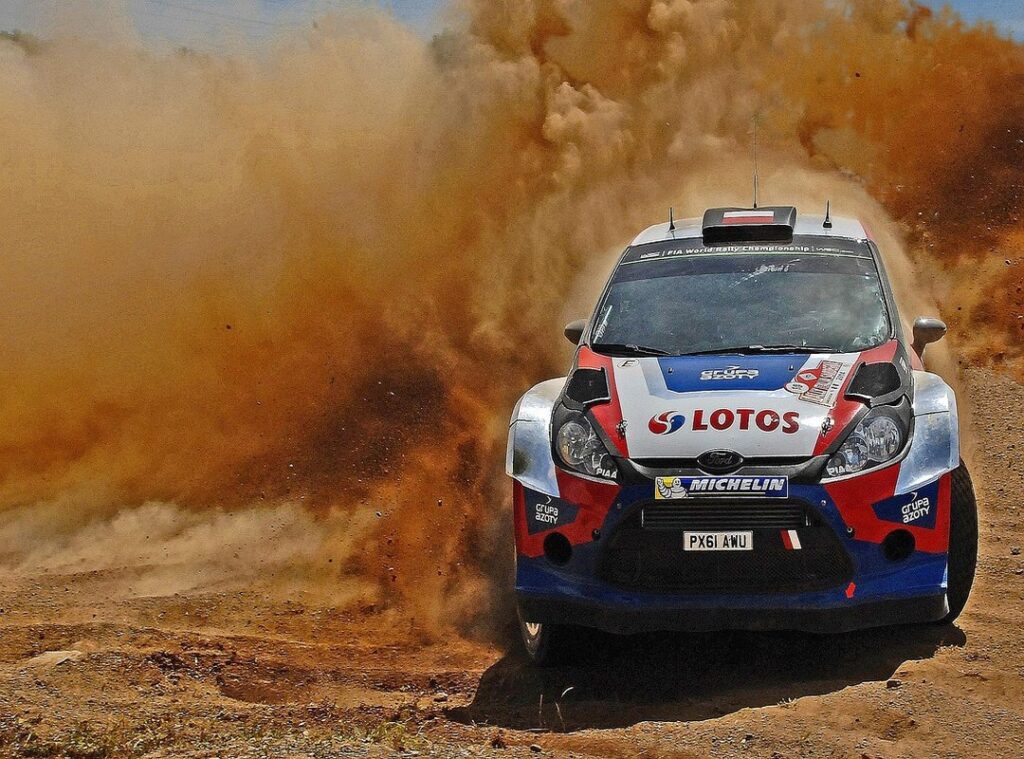

I’ve been obsessed with racing since I was a kid watching cars blur past at impossible speeds.
You’ve seen modern races with their million-dollar machines and cutting-edge tech. But do you know how we got here? Most people don’t.
Racing didn’t start in gleaming stadiums with corporate sponsors. It started on dirt roads with people who just wanted to see how fast they could go.
The evolution of racing fmbmotoracing tells a story that’s bigger than cars. It’s about human beings pushing machines (and themselves) past every limit anyone thought possible.
I’m going to walk you through over a century of motorsports history. From the first brave souls who raced horseless carriages to today’s hypersonic land jets that seem to defy physics.
This isn’t just dates and names. It’s the story of how innovation, courage, and a little bit of madness transformed racing from a curiosity into one of the most advanced technological showcases on the planet.
You’ll see how each era built on the last. How failures led to breakthroughs. How danger pushed safety forward.
By the end, you’ll understand not just what happened, but why modern racing looks the way it does.
The Dawn of Speed: The Pioneers and Proving Grounds
Most people think early racing was about speed.
It wasn’t.
The first city-to-city races of the late 1890s were survival contests. You won by finishing, not by going fast. Cars broke down every few miles. Roads were dirt paths that turned to mud when it rained.
Speed was secondary to just making it to the next town.
Here’s where the story gets interesting. Everyone celebrates these early races as romantic adventures. But the truth? They were poorly organized chaos that killed spectators and drivers alike (the 1903 Paris-Madrid race was so deadly they canceled it mid-event).
The real revolution came when racing moved off public roads.
Brooklands opened in 1907. Indianapolis Motor Speedway followed in 1909. Suddenly you had purpose-built circuits where racing could happen safely. Well, safer anyway.
This is when the evolution of racing fmbmotoracing actually began. Not on dusty roads between cities, but on banked ovals and closed circuits.
People romanticize the “heroic era” drivers. And sure, they had guts. They drove cars with no seatbelts, no helmets, and fuel tanks positioned right next to their legs. One spark and you were done.
But let’s be honest about something nobody wants to admit.
Most of these pioneers weren’t heroes. They were reckless.
They pushed primitive machines past any reasonable limit because they didn’t know better. Or didn’t care. The line between bravery and stupidity gets pretty thin when you’re doing 100 mph in a car held together with wire and hope.
The manufacturers got it right though. Mercedes, Peugeot, and Fiat saw track racing fmbmotoracing as a testing ground. Break it on Sunday, fix it on Monday, sell the improved version on Tuesday.
That part? That was smart.
The Engineering Revolution: Mastering Aerodynamics and Power
Racing cars in the 1950s were basically road cars with bigger engines.
Then everything changed.
The 1960s brought wings. Not the tiny decorative kind. Real wings that pushed cars into the ground. The Chaparral 2E showed up in 1966 with a massive rear wing that generated actual downforce (Jim Hall basically invented modern aerodynamics while everyone else was still guessing).
By 1978, the Lotus 79 was pulling 2.5 times its own weight in downforce through ground effect. That’s not an exaggeration. The car literally sucked itself to the track.
Cornering speeds jumped 30% in less than a decade.
But aerodynamics was just half the story.
The power wars were getting wild. Ferrari’s V12s in the 1960s made around 400 horsepower. Impressive for the time. Then turbos arrived and the numbers went insane.
BMW’s turbo four-cylinder in 1986 produced over 1,400 horsepower in qualifying trim. From a 1.5-liter engine. That’s nearly 1,000 horsepower per liter (modern road cars struggle to hit 150).
The FIA banned those monsters because drivers couldn’t handle the power. Too many crashes. Too many close calls.
Today’s hybrid power units make around 1,000 horsepower but use 35% less fuel than the V8s from 2013. The evolution of racing fmbmotoracing proves that efficiency and speed aren’t opposites anymore.
Material science kept pace with everything else.
Steel tube frames gave way to aluminum monocoques in the 1960s. Then carbon fiber showed up in 1981 with the McLaren MP4/1. The weight savings were massive but that wasn’t the real win.
Carbon fiber absorbed impact energy better than anything else. John Watson walked away from a 150 mph crash at Monza in 1981 because of it.
Now here’s what most people forget.
None of this matters without tires and brakes. A 1,400 horsepower car is useless if it can’t stop or turn. Tire compounds in the 1980s could handle maybe 4g of lateral force. Modern slicks hit 6g regularly.
Brake technology jumped from solid discs to carbon-carbon composites that work at 1,000 degrees Celsius. Stopping distances from 200 mph dropped by nearly 100 feet between 1990 and 2010.
The engineering didn’t just make cars faster. It made them survivable.
The Safety Imperative: A Race to Protect the Driver
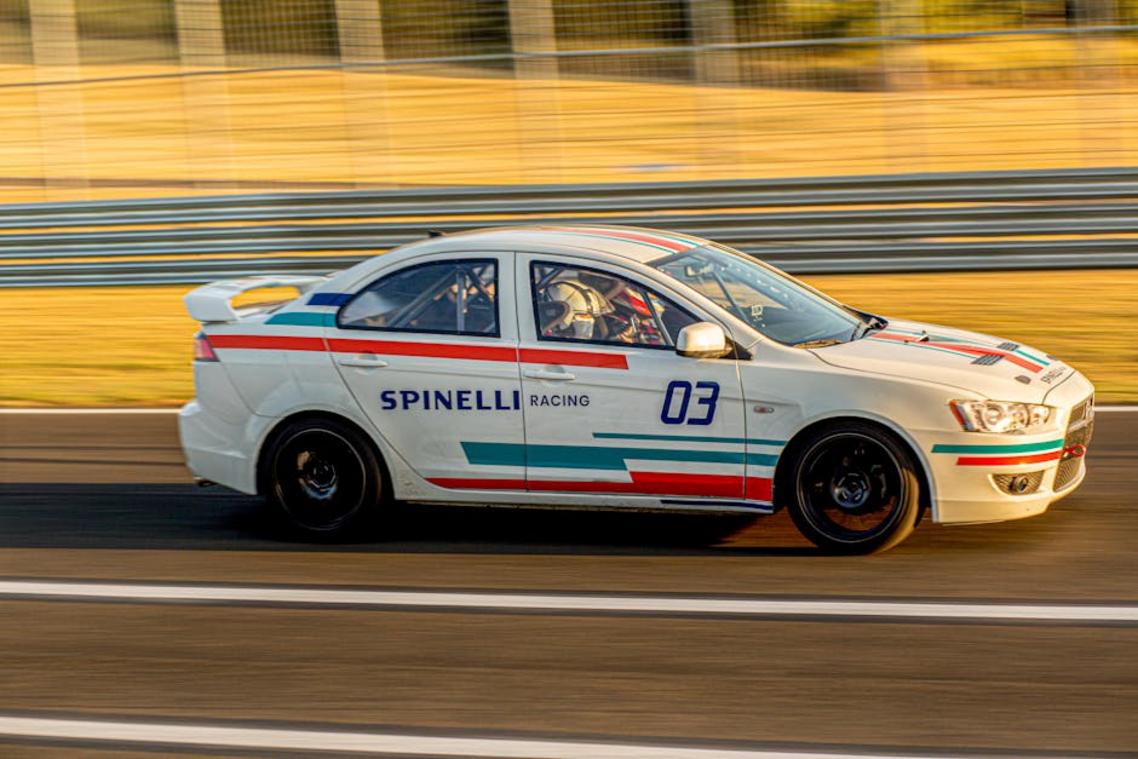
I still remember watching old footage of Ayrton Senna’s crash at Imola in 1994.
I was young. Didn’t really understand what I was seeing at first. But the silence that followed told me everything I needed to know.
That weekend changed racing forever.
Some people argue that danger is part of the sport. That removing risk takes away what makes racing special. They say drivers know what they’re signing up for and we shouldn’t sanitize everything.
I hear that argument a lot.
But here’s what those people don’t get. Safety isn’t about removing danger. It’s about giving drivers a fighting chance when things go wrong. And in racing, things always go wrong eventually.
The mid-20th century was brutal. Jim Clark, Jochen Rindt, Gilles Villeneuve. The list goes on. Drivers died at a rate that would be unthinkable today. Not because they were less skilled but because the cars and tracks were death traps.
That had to change.
The evolution of racing fmbmotoracing brought us the survival cell. It’s a carbon fiber cocoon that sits at the heart of every modern race car. When a car hits a wall at 150 mph, this cell stays intact while everything around it crumbles.
Those crumple zones aren’t a design flaw. They’re the whole point. Deformable crash structures absorb energy that would otherwise go straight into the driver’s body.
Then there are the tethers. Six cables per wheel that keep components from flying into the cockpit or into another car. Fire suppression systems that activate in milliseconds.
But the car is only half the equation.
The HANS device looked weird when it first showed up. Drivers complained it was uncomfortable and restricted movement. Now? Nobody races without one. It keeps your head from snapping forward in a crash, which is what killed Dale Earnhardt.
Full-face helmets and fire-retardant suits have come a long way too. Romain Grosjean walked away from a fireball in Bahrain because his gear gave him those critical extra seconds.
Track design matters just as much. Modern circuits have runoff areas the size of parking lots. SAFER barriers that flex on impact instead of acting like concrete walls. Medical centers that rival trauma hospitals.
None of this brings back the drivers we lost.
But it means the next generation has a better shot at going home after the race.
The Digital Age: Data, Simulation, and the Future of Racing
Racing isn’t what it used to be.
Walk into any modern pit garage and you’ll see more computer screens than wrenches. That’s not a bad thing. It’s just different.
The truth is, data changed everything.
Teams now collect thousands of data points every second a car is on track. Tire temperature, brake pressure, suspension movement. All of it gets fed into systems that can spot a problem before the driver even feels it.
What does this mean for you as a fan? You get to see racing at a level of precision that was impossible twenty years ago. Teams can make setup changes based on actual numbers instead of gut feelings (which, let’s be honest, were wrong half the time).
But here’s where it gets interesting.
Simulators have become so good that drivers can learn entire tracks without leaving the factory. They’re not just video games anymore. These rigs cost millions and replicate everything from G-forces to track bumps.
For teams, this saves serious money. You can test a hundred different setups in a simulator instead of burning through tires and fuel at the actual circuit.
Now, some purists argue this takes the soul out of racing. They say real drivers should learn on real tracks. And I understand that sentiment.
But think about what this actually gives us. Young drivers who can’t afford unlimited track time now have a way to compete. Teams can try risky strategies without destroying equipment. That’s progress.
The evolution of racing fmbmotoracing shows us where we’re headed next.
Formula E is already proving that electric racing can be just as competitive as traditional motorsports. The racing is close, the technology is advancing fast, and manufacturers are paying attention.
Then there’s AI. Teams are starting to use it for race strategy, predicting when competitors will pit or when weather might change. It’s not replacing human decision-making. It’s making those decisions better.
And for fans? The experience has completely changed. You can watch onboard cameras, see live telemetry, and follow your favorite driver’s data on your phone during the race. Some series even let you choose different camera angles or listen to team radio whenever you want.
That connection between what’s happening on track and what you see at home keeps getting tighter. You’re not just watching motorbike racing fmbmotoracing anymore. You’re practically in the garage with the team.
The Unending Race for What’s Next
You came here to understand how motorsports became what it is today.
Now you see the full picture. Racing went from reckless daredevils on dirt tracks to a proving ground for technology that changes how we all drive.
Speed has always been the driver. That hunger to go faster pushed engineers to solve problems that seemed impossible.
Every breakthrough on the track eventually made it to your driveway. Anti-lock brakes, fuel injection, aerodynamic design (even the rearview mirror started in racing). The cars you drive today are safer and better because someone needed to shave seconds off a lap time decades ago.
Here’s what I want you to do: Watch a race this weekend. Don’t just watch the cars go around in circles.
Think about the hundred years of evolution of racing fmbmotoracing that went into that moment. The crashes that led to better helmets. The engine failures that sparked new materials. The deaths that forced safety innovations.
Every lap carries that history with it.
The race for what’s next never stops. Neither should your appreciation for how we got here.
 Grythara Cloud is the founder of FMB Motor Racing, a platform created for passionate auto and moto enthusiasts seeking informative coverage on racing culture, vehicle performance, and modern motorsport trends. With a deep appreciation for speed, engineering, and automotive innovation, Grythara built the platform to connect readers with practical insights and exciting developments from the racing world.