

I’ve dropped helmets. I’ve bought the wrong size. I’ve worn one that gave me a headache after ten minutes.
Choosing a motorbike helmet shouldn’t feel like decoding a manual written in Klingon.
But it does.
You want safety. You want comfort. You want something that stays put when you’re leaning into a curve.
Not sliding off your head like a soggy paper plate.
A helmet isn’t just gear. It’s the only thing between you and the pavement.
And no, “it fits okay” isn’t good enough.
Fit matters. Safety standards matter. And yes.
Your riding style changes what kind of helmet actually works for you.
Are you on the highway every day? Or hitting gravel trails on weekends? That changes everything.
This Motorbike Helmet Guideline Fmbmotogear cuts through the noise.
No jargon. No fluff. Just straight talk about what makes a helmet safe, comfortable, and right for you.
You’ll learn how to check fit without guessing. How to read safety labels without squinting. And why some helmets look cool but fail the most basic test.
By the end, you’ll know exactly what to buy. And why.
Your Helmet Isn’t Optional. It’s Non-Negotiable.
I’ve seen what happens without one. Not pretty. Not fixable.
Helmets save lives. Full stop.
You need to know the labels before you buy. Start with Motorbike Helmet Guideline Fmbmotogear. That’s where I check first.
DOT is the bare legal minimum in the US. It tests for impact and strap strength (but) barely. (It hasn’t been updated since 1974.)
ECE is stricter. Used across Europe. Tests more angles, more impacts, and adds roll-off resistance.
It’s better. But still not the toughest.
Snell? That’s the racing standard. Lab-tested beyond street use.
Harder shell. Better energy absorption. You’ll pay more (but) your skull won’t care about the price.
None of these are suggestions. They’re proof the helmet passed real tests. Not marketing fluff.
Impact absorption means it crushes so you don’t. Penetration resistance stops sharp objects from poking through. Strap strength keeps it on your head during a slide.
You wouldn’t skip brakes. Don’t skip certified protection.
If it doesn’t have at least DOT stamped inside (walk) away. Seriously.
No helmet is perfect. But a certified one gives you fighting odds.
That’s all I ask.
Fit Is Not Optional
I bought my first helmet thinking size charts were gospel.
They’re not.
A helmet that meets safety standards means nothing if it slides around your skull.
That’s why fit is the only thing that matters after certification.
It should feel snug all over. Not tight enough to give you a headache. Not loose enough to wiggle when you shake your head.
Here’s how I measure now: wrap a soft tape around my forehead, just above my eyebrows and ears. No guessing. No eyeballing.
Just tape, skin, and honesty.
Try it on. Shake side to side. Shake up and down.
If the shell moves but your skin stays put, it’s too big.
Cheek pads should press gently. Not crush.
If they don’t, the helmet won’t stay in place during impact.
An ill-fitting helmet fails twice: it won’t protect you, and you’ll hate wearing it. You’ll adjust it constantly. You’ll get distracted.
You’ll skip wearing it altogether.
I learned this the hard way after a low-speed drop where my helmet shifted sideways.
It stayed on. But barely.
Don’t wait for that moment to realize fit isn’t about comfort.
It’s about control.
Follow the Motorbike Helmet Guideline Fmbmotogear (but) test it yourself.
Because no chart knows your head like you do.
Still think your size hasn’t changed since last year?
Go measure again.
Helmet Types: Which One Actually Fits Your Ride?
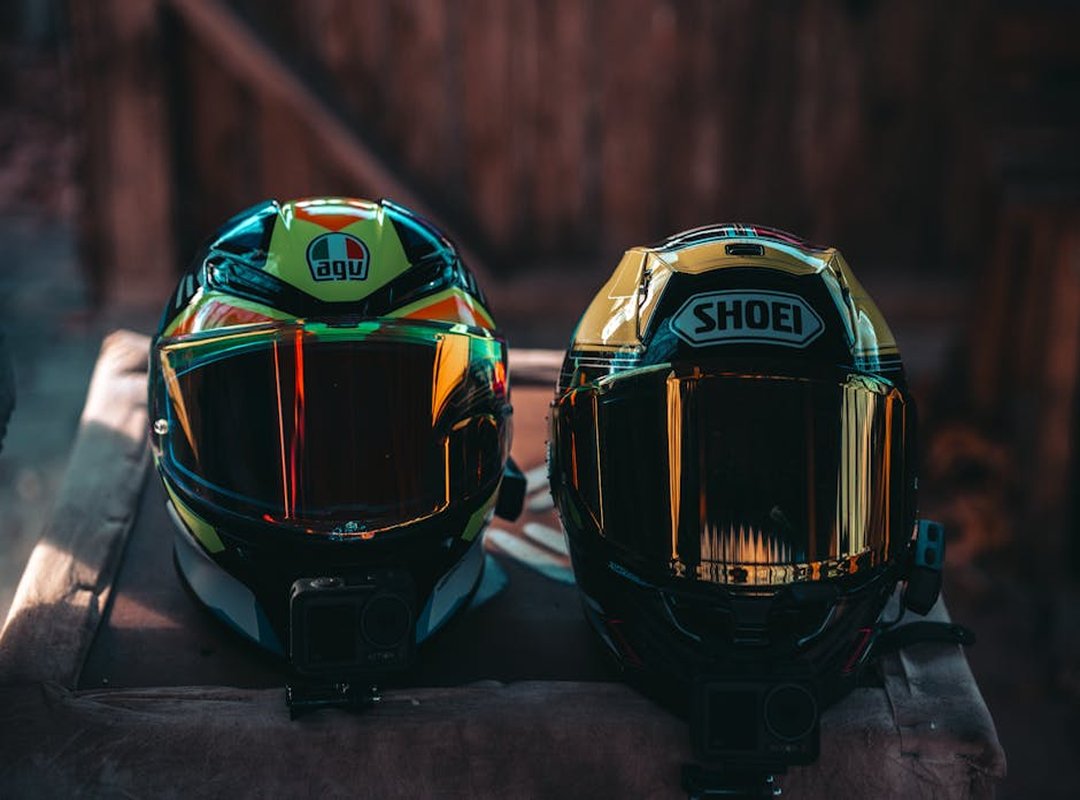
Full-face helmets cover your whole head. I wear one every time I ride. They stop rocks, wind, and worst-case impacts better than anything else.
Modular helmets flip up. Great for chatting at gas stations or adjusting sunglasses mid-ride. But they weigh more and the hinge adds weak points.
Open-face helmets leave your chin bare. Fine for scooters in town at 25 mph. Not fine if you hit gravel at 45.
Off-road helmets have big chin bars and visors. They’re built for dirt, goggles, and air. Wear one on the highway?
Your neck will ache in ten minutes.
Protection isn’t just about coverage. It’s about how well the shell holds up, how the liner absorbs shock, and whether it stays on your head. Ventilation matters too (a) hot helmet makes you tired fast.
Comfort changes with speed, weather, and ride length. A touring rider needs airflow and padding that lasts six hours. A commuter needs something light and easy to take on and off.
You don’t need the fanciest helmet.
You need the one that matches your speed, your roads, and your habits.
This guide is part of the Motorbike Helmet Guideline Fmbmotogear.
learn more about gear that actually holds up.
What’s your go-to helmet?
And more importantly (why) did you pick it?
What Actually Makes a Helmet Worth Wearing
I’ve worn helmets that made my ears ache after twenty minutes.
You know the ones.
Ventilation isn’t just about sweat. It stops your visor from fogging mid-turn. No one wants to wipe steam off glass while leaning into a curve.
Removable lining? Not a luxury. It’s how you keep the thing from smelling like old gym socks.
A good visor scratches less, blocks UV, and swaps out without swearing.
If it fogs every time you stop at a light, it’s not saving you. It’s stressing you.
Wash it. Dry it. Ride again.
Lighter weight means less neck fatigue on long rides.
Yes, even if you’re strong (your) spine doesn’t care.
Wind noise adds up. A quiet helmet lets you hear traffic (not) just roar. That difference matters when someone’s pulling out blind.
Some helmets have slots or mounts for comms. Others fight you every time you try to plug in. Ask yourself: do I want to talk to my passenger.
Or yell?
These features don’t exist to pad a spec sheet. They keep you alert. Comfortable.
Alive.
You’re not buying plastic and foam. You’re buying focus. Time.
Confidence.
Motorbike Helmet Guideline Fmbmotogear isn’t about ticking boxes.
It’s about riding longer, safer, and without distraction.
Need boots that match that same standard?
Check out How to Choose Motorcycle Boots Fmbmotogear
Your Helmet Choice Ends Here
I’ve stood in that helmet shop. Stared at the wall of shells. Felt the panic rise.
You know that feeling too.
Too many choices. Too much jargon. Not enough straight talk.
That’s why I wrote the Motorbike Helmet Guideline Fmbmotogear. Not to confuse you. To cut through it.
Safety standards aren’t optional. Fit isn’t negotiable. A helmet that slips, pinches, or doesn’t meet DOT or ECE?
It’s just plastic with a price tag.
You ride for freedom (not) risk. So why settle for guesswork?
Try on five helmets. Sit with them. Shake your head.
Walk around. See what stays put.
If it hurts after two minutes. It fails. If it feels like an afterthought.
It fails. If it doesn’t match how and where you ride (it) fails.
Your skull doesn’t get a second chance. Neither does your peace of mind.
So stop scrolling. Stop comparing specs like they’re lottery numbers.
Go try one on today. Right now. Not tomorrow.
Not after coffee.
Grab the Motorbike Helmet Guideline Fmbmotogear. Use it like a checklist. Not a suggestion.
Then pick the helmet that fits you, not the shelf.
Ride safe. Ride smart. Ride sure.
 Sylrith Marrowlance is a contributor at FMB Motor Racing who specializes in racing highlights, performance vehicles, and automotive technology trends. Passionate about motorsport culture and engineering advancements, he creates engaging articles that keep readers informed about the latest developments in the racing world.