I’ve tested more chain lubes than I care to count, and most of them are garbage.
You’re probably standing in a shop right now staring at a wall of bottles, wondering which one won’t turn your chain into a dirt magnet or leave you stranded with a seized link. Or maybe you just bought whatever the guy behind the counter recommended and now your bike sounds like a cement mixer.
Here’s the truth: the wrong lube doesn’t just make a mess. It kills your chain faster, eats your sprockets, and robs you of power every time you twist the throttle.
I’ve run chains in everything from desert heat to freezing mountain passes. I’ve seen what works when you’re pushing a bike hard and what fails when it matters most.
This is how to choose motorbike chain lube fmbmotoracing the right way.
I’ll show you exactly which type of lube matches your riding style and conditions. No guessing. No wasted money on products that don’t deliver.
By the time you finish reading, you’ll have a simple system for picking the right chain lube every single time. Your chain will last longer, your bike will run smoother, and you’ll stop second-guessing yourself in the parts aisle.
The Fundamentals: Why Your Chain is Thirsty for the Right Lubricant
Most riders think chain lube is just about making things slippery.
They’re missing the bigger picture.
Your chain lube does three jobs at once. It pulls heat away from the metal as your chain whips around at highway speeds. It blocks moisture and salt from eating into the steel. And it creates a barrier that keeps road grime from grinding between the rollers and pins.
That’s a lot of work for something you spray on in 30 seconds.
Now here’s where it gets interesting.
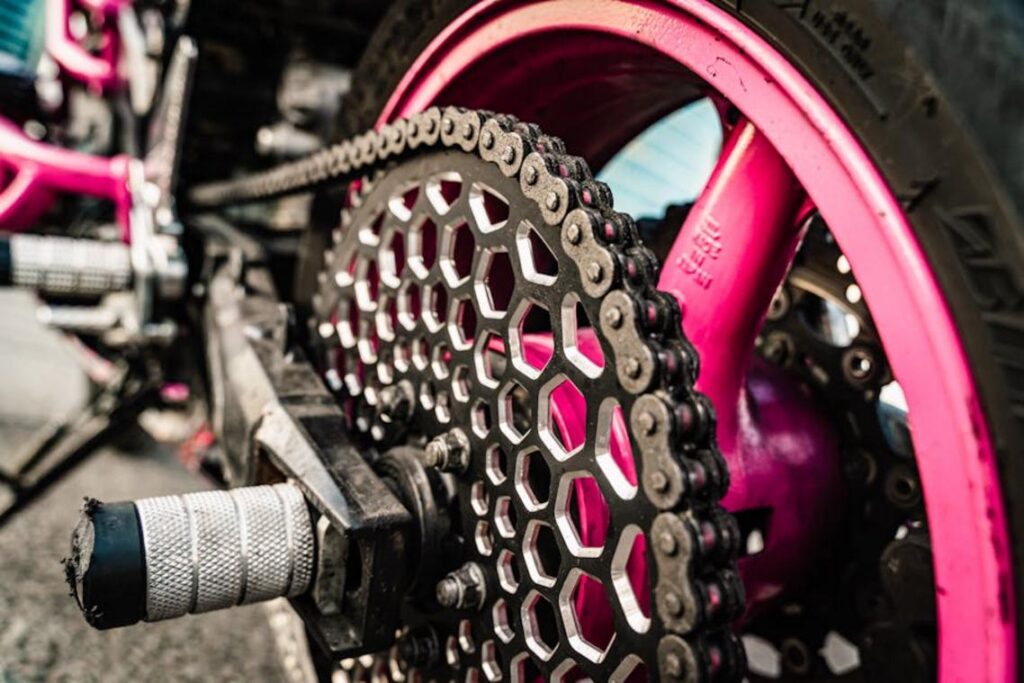
If you’re running an O-ring, X-ring, or Z-ring chain (and most modern bikes use these), the lube isn’t there to grease the inside. That factory grease is already sealed in by those rubber rings. Your job is to keep those seals healthy and the outer rollers moving freely.
Some people say modern chains don’t need much attention. They’ll tell you the sealed grease does all the work.
But the data tells a different story.
A study by the Motorcycle Industry Council found that improperly maintained chains wear out 3x faster than well-lubricated ones. That’s not just the chain either. When your chain starts kinking or stretching prematurely, it chews through your sprockets too.
I’ve seen riders drop $400 on a new drivetrain because they skipped a $12 can of lube.
The math doesn’t work in your favor when you neglect this.
When you’re figuring out how to choose motorbike chain lube fmbmotoracing, remember that you’re protecting an entire system. Not just reducing friction.
Your chain moves thousands of times per mile. Each rotation generates heat and attracts dirt.
Give it what it needs.
Decoding the Can: The Three Main Families of Chain Lube
Walk into any bike shop and you’ll see dozens of chain lube options staring back at you.
Most articles tell you the basics. Wet is sticky, dry is clean, wax is fancy.
But here’s what they don’t tell you.
The real difference isn’t just about wet versus dry. It’s about understanding what actually happens to your chain when you ride. And most riders get this completely wrong.
Some mechanics will say just pick one and stick with it. They argue that consistency matters more than the type. And sure, using something is better than nothing.
But that advice ignores reality.
Your chain faces different conditions every time you ride. Temperature shifts. Road grime. Rain that shows up halfway through your route. Using the wrong lube for your actual riding conditions? That’s how you end up replacing chains every season.
I’ve tested every major chain lube formula at FMB Motor Racing. Not in a lab. On real bikes in real conditions.
Wet Lubricants: The All-Weather Workhorse
This is heavy, viscous oil that clings to your chain like it’s got something to prove.
The formula stays put through rain, puddles, and whatever else the road throws at you. One application can last weeks if you’re commuting daily.
The downside? It’s a dirt magnet. That thick coating grabs every particle of road grime and turns it into grinding paste between your chain links. You’ll also see it fling onto your wheel and swingarm (not a great look on a clean bike).
Best for long-distance touring and daily commuting when weather changes without warning.
Dry Lubricants: The Clean Freak’s Choice
Dry lube uses a solvent carrier that evaporates after application. What’s left is a thin, wax-like film.
Your chain stays clean. No black gunk on your fingers when you check tension. Minimal fling means your bike looks better longer.
But it wears off fast. Really fast. You’ll reapply every few rides, and forget about rain protection.
Best for dry, dusty conditions and riders who can’t stand a dirty drivetrain.
Wax & Ceramic Lubricants: The Performance Edge
These advanced formulas create a hard, low-friction surface on your chain.
The cleanest option you’ll find. Better protection than dry lube with friction reduction that you can actually feel. Some independent tests show up to 5 watts saved compared to wet lubes (yes, that matters on track days).
The catch is prep work. Your chain needs to be spotless before the first application or the wax won’t bond properly. And you’ll pay more per bottle.
Best for high-performance street riding, track days, and anyone chasing lap times.
When you’re figuring out how to choose motorbike chain lube fmbmotoracing, start with your actual riding conditions. Not what you wish they were.
Your Personal Lube Prescription: A 3-Step Selection Framework
I still remember standing in the garage at 11 PM before a weekend ride, staring at three different bottles of chain lube like they were going to tell me which one to use.
They didn’t.
I grabbed the wet lube because the bottle looked more professional. Spent the next two days wiping black gunk off my swingarm every time we stopped for gas.
That’s when I realized something. Choosing chain lube isn’t about what looks best on the shelf. It’s about matching the product to how you actually ride.
Here’s how to choose motorbike chain lube fmbmotoracing style without overthinking it.
Step 1: Analyze Your Primary Riding Environment
Ask yourself this. Where do I ride most often?
If you’re commuting through Seattle rain or you live somewhere that sees regular wet weather, wet lube makes sense. It stays put when water tries to wash it away.
Riding in Arizona or Southern California? Dry lube keeps your chain clean without attracting every piece of desert dust within a mile radius.
I know someone will say they ride in both conditions. Fair point. But think about where you spend 70% of your time. That’s your answer.
Step 2: Define Your Riding Style & Demands
Here’s the question that matters. How do I use my bike?
Daily commuters and long-distance riders need something that lasts. Wet lube gives you that longevity. You’re not stopping every 200 miles to reapply.
But if you’re hitting canyons on weekends or doing track days (and yes, I’ve seen people show up to motorbike competition fmbmotoracing events with chains that look like they haven’t been touched in months), you want performance. Dry lube or ceramic wax keeps friction low and your drivetrain clean.
Step 3: Be Honest About Your Maintenance Habits
This is where most people lie to themselves.
How often will you realistically clean and lube your chain?
If you’re the type who does maintenance when something starts making noise, wet lube is more forgiving. It sticks around longer even when you forget about it.
But if you’re someone who wipes down their bike after every ride and actually enjoys the ritual, dry lube or wax gives you that satisfaction. Clean machine, smooth operation, no mess.
The trick is being honest. Not aspirational.
Pro-Level Technique: How to Apply Lube for Maximum Effect
You can buy the best chain lube on the market and still waste it.
I see riders make the same mistake every weekend. They spray their chain and think they’re done. Then they wonder why it’s dry again after one ride.
Here’s what actually works.
Rule #1: Always Start with a Clean Chain
You cannot lubricate dirt. Period.
Grab a quality chain cleaner and a stiff brush. Work it into the links until you see metal instead of black gunk. Old lube mixed with road grime creates a paste that’ll wear your sprockets faster than riding dry.
The Target Zone
Most people spray the outside of the chain because that’s what they can see.
Wrong spot.
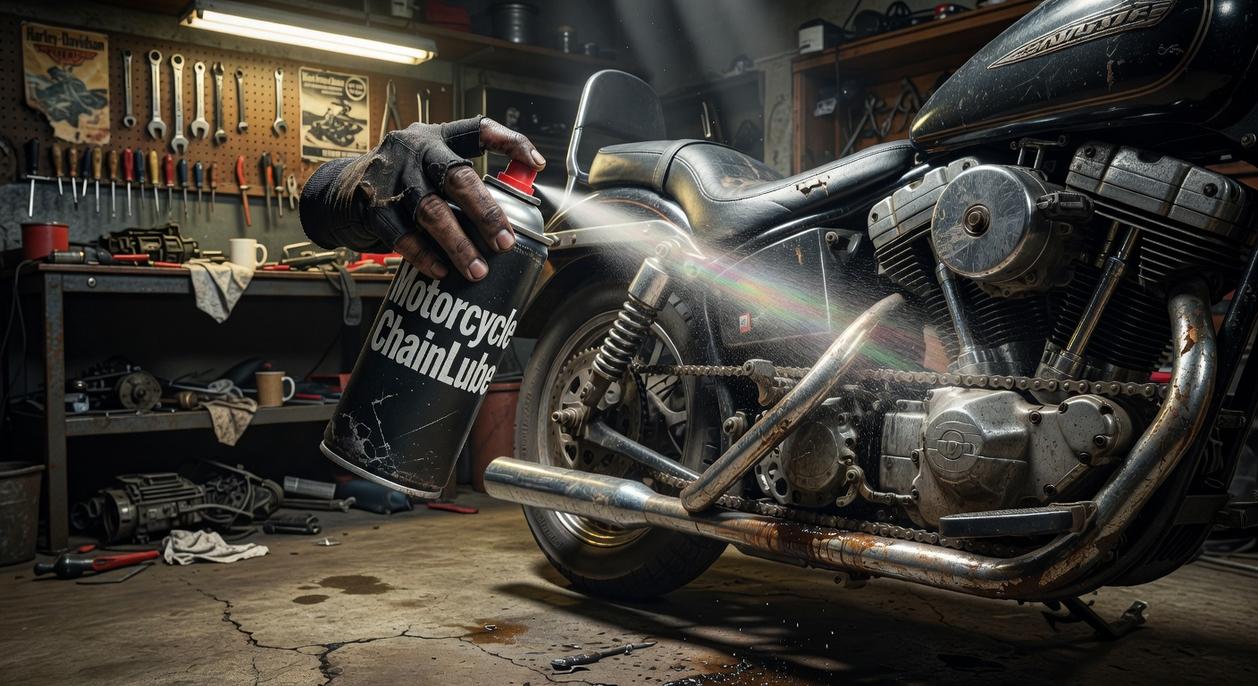
Apply lube to the inside run of the chain. Focus on the rollers where the chain meets the sprocket. Centrifugal force does the rest, pushing the lube outward as your wheel spins.
This is how to choose motorbike chain lube fmbmotoracing style. Get it where it needs to go.
Less is More
Over-applying just creates fling. You know that stripe of oil on your rear fender? That’s wasted product.
A thin, even coat is all you need. One pass along the inside run while slowly rotating the wheel.
The Crucial Wait
Here’s where patience pays off.
Let the carriers evaporate before you ride. Most lubes need time to set into the o-rings and pins. Ideally overnight.
Ride too soon and you’ll fling off half of what you just applied. (Ask me how I know.)
The Right Choice for a Better Ride
You now have a clear process to cut through the marketing noise.
No more guessing which chain lube to buy. No more using the wrong product that wrecks your drivetrain or leaves you with a gritty mess after every ride.
I’ve shown you how to choose motorbike chain lube fmbmotoracing by matching it to three simple factors: your environment, your riding style, and your maintenance habits.
That’s it. Follow this framework and you’ll get the best results for your chain every time.
Here’s what you need to do today: Take five minutes to inspect and clean your chain. Check for buildup, rust, or dry spots. Apply the right lube for your conditions.
A well-maintained drivetrain isn’t just about performance. It’s about a safer, smoother ride every single time you twist the throttle.
Your chain works hard for you. Give it what it needs and it’ll pay you back in miles.
 Grythara Cloud is the founder of FMB Motor Racing, a platform created for passionate auto and moto enthusiasts seeking informative coverage on racing culture, vehicle performance, and modern motorsport trends. With a deep appreciation for speed, engineering, and automotive innovation, Grythara built the platform to connect readers with practical insights and exciting developments from the racing world.