I’ve been trackside when riders walk away from crashes that should have killed them.
You watch motorcycle racing and wonder how anyone survives those speeds. The bikes hit over 200 mph. The crashes look catastrophic. Yet riders get up and race the next week.
Is motorcycle racing safe fmbmotoracing? That’s the wrong question. The right one is: what makes it survivable?
Most people see the danger. They miss the science working behind every lap.
I’m talking about layers of protection most spectators never notice. The gear isn’t just leather and padding. The tracks aren’t just asphalt and barriers. The bikes themselves are built with systems designed specifically for when things go wrong.
And they do go wrong. Fast.
This article breaks down what actually keeps riders alive. The technology in their suits. The engineering in the barriers. The regulations that changed after riders didn’t walk away.
We’ve spent years studying race engineering and watching how safety systems perform in real conditions. Not in labs. On tracks where milliseconds matter.
You’ll learn what happens in those first moments after a crash. What’s protecting the rider’s body. Why modern tracks are designed the way they are. How the sport learned from its worst days.
No sugar coating. Just the reality of what makes motorcycle racing a sport where riders can push limits and still come home.
The Rider’s Armor: Personal Protective Equipment (PPE)
Your gear is the only thing between you and the asphalt at 150 mph.
Let me be clear about something. I’ve seen riders walk away from crashes that should’ve ended their careers. And I’ve seen others get hurt in low-speed incidents that looked like nothing.
The difference? Their gear.
Some people argue that expensive racing gear is overkill for track days. They say a basic DOT helmet and street leathers are good enough. After all, you’re not actually racing, right?
Here’s where that thinking falls apart.
The Helmet: More Than Just a Shell
Your brain doesn’t care if you’re in a race or a practice session. It only cares about impact forces.
A quality helmet uses multi-density EPS liners. The outer layer handles big hits while the inner layers manage smaller impacts. Think of it like crumple zones in a car, but for your head.
FIM and ECE standards set the baseline. But here’s what matters more: rotational force mitigation. When your head hits the ground, it doesn’t just stop. It twists. That twisting motion causes serious brain injuries.
MIPS technology addresses this by allowing the helmet to rotate slightly on impact. Your head stays more stable inside while the shell takes the rotational energy.
The Racing Suit: A Second Skin
Kangaroo leather versus cowhide. It’s not just about being fancy.
Kangaroo leather is thinner and lighter but stronger in abrasion resistance. Professional suits use it in high-wear zones because when you’re sliding at speed, every millimeter counts.
Aramid fibers reinforce stress points. CE Level 2 armor protects your shoulders, elbows, knees, and back. But the real game-changer? Airbag technology.
Modern airbag systems deploy in milliseconds. They spread impact forces across a larger area and add a cushion between you and whatever you’re about to hit. (The first time you see one deploy in a crash, you’ll understand why professionals won’t ride without them.)
Gloves & Boots: Critical Contact Points
Your hands and feet take the first impact in most crashes.
Scaphoid protection in gloves isn’t optional. The scaphoid bone in your wrist breaks easily and heals poorly. Good gloves have dedicated armor that wraps around this vulnerable spot.
Boots need anti-torsion systems. Your ankle wants to bend in ways it shouldn’t during a crash. Quality boots use internal supports that prevent twisting while still letting you shift and brake normally.
Street boots versus race boots? Race boots are stiffer and less comfortable for walking. But they’re built to keep your ankle intact when forces try to tear it apart.
Professional-Grade Gear: What You’re Actually Paying For
Here’s what FMB Motor Racing has learned from thousands of race simulations.
Professional gear isn’t just thicker or heavier. It’s engineered differently. The materials handle high-speed abrasion better. The armor stays in place during slides. The stitching doesn’t fail under stress.
You can find cheaper alternatives that look similar. They might even have the same certification stamps. But they haven’t been tested in real race conditions where speeds and forces exceed what street riding ever demands.
Is is motorcycle racing safe fmbmotoracing? It’s safer when you wear gear that’s actually designed for racing speeds.
The gap between street gear and race gear shows up in the details. How the suit fits when you’re tucked in. Whether the armor shifts when you slide. If the materials can handle sustained abrasion instead of just a quick scrape.
I’m not saying you need to spend five grand on a suit for your first track day. But I am saying that understanding what professional gear does differently helps you make better choices about what you actually need.
Your body only gets one chance to survive a crash. Your gear needs to work the first time.
The Intelligent Machine: On-Bike Safety Technology
You know what keeps a MotoGP rider from becoming a statistic at 220 mph?
It’s not just skill.
These bikes have computers working faster than the human brain can process danger. And I’m talking about systems that make decisions in milliseconds while you’re still thinking about turning the throttle.
Traction Control & Anti-Wheelie
Think of it this way. You’re accelerating hard out of a corner and the rear tire starts to slip. By the time you feel it, you’re already losing control.
The bike’s traction control? It already knew three milliseconds ago.
These systems monitor wheel speed, lean angle, and throttle position constantly. When the rear wheel spins faster than the front (even by a fraction), the system cuts power instantly. Not enough to slow you down. Just enough to keep rubber on asphalt.
Anti-wheelie works the same way. It reads front wheel lift and adjusts power before you end up on your back.
Some people say electronics take the skill out of racing. That real riders don’t need computer help.
But here’s what they don’t understand. These systems don’t ride for you. They just keep you alive long enough to actually use your skill. A high-side crash at race speeds doesn’t care how talented you are.
Advanced Braking Systems
Race-spec ABS isn’t like what’s on your street bike.
I’ve seen riders brake from 200 mph to 60 mph in about 300 feet. The front tire is right at the edge of locking up the entire time. One mistake and you’re sliding into gravel at highway speeds.
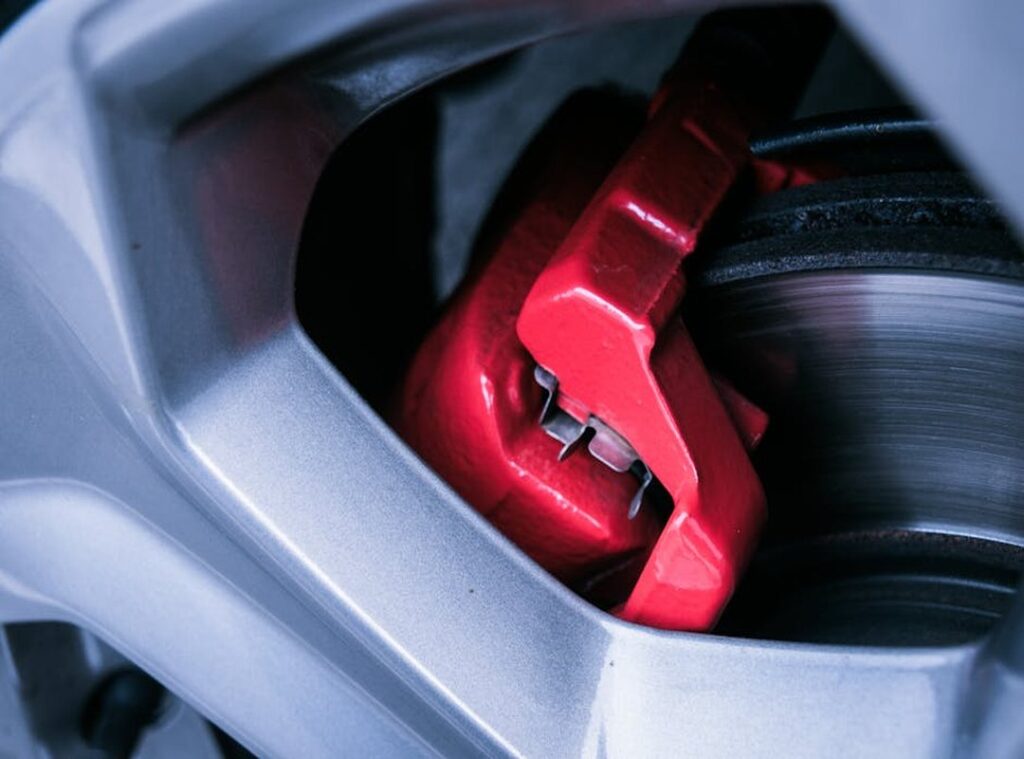
Carbon ceramic brakes can handle temperatures over 1,000 degrees Fahrenheit. Lap after lap. Without fading.
The ABS monitors each wheel independently and adjusts brake pressure up to 100 times per second. You get maximum stopping power without losing the front end. (And trust me, losing the front under heavy braking is not something you walk away from easily.)
Aerodynamic Winglets
Here’s where things get interesting.
Those weird wings you see on modern race bikes? They’re not just for looks. At high speeds, they generate serious downforce. We’re talking hundreds of pounds of force pushing the bike into the track.
More downforce means more grip. More grip means you can brake later and carry more speed through corners.
The difference is real. Riders report feeling like the bike is glued to the track at speeds where older bikes would start getting sketchy. When you’re leaned over at 60 degrees doing 150 mph, that stability matters.
Competitive Edge
Consumer bikes react to problems.
Race bikes predict them.
FMBMotoracing tracks show these machines use data from dozens of sensors. Gyroscopes, accelerometers, wheel speed sensors, throttle position, brake pressure. All feeding information to the ECU faster than you can blink.
The system knows you’re about to lose traction before you do. It knows the front wheel is about to tuck. It knows you’re carrying too much speed for that lean angle.
And it makes corrections you never even notice.
Is motorcycle racing safe fmbmotoracing? Not exactly. But these systems make it survivable. There’s a difference.
Without this technology, half the grid wouldn’t finish a race. With it, riders push limits that seemed impossible ten years ago.
That’s the real benefit. Not just safety. The ability to ride at the absolute edge without crossing into disaster.
The Controlled Environment: Track Design and Marshalling

You can’t prevent every crash in motorcycle racing.
But you can control what happens when a rider goes down.
That’s the whole point of modern track design. It’s not about stopping crashes (because that’s impossible). It’s about managing them.
Run-off areas are your safety net. When a rider loses it at 150 mph, they need somewhere to go that isn’t a concrete wall.
Asphalt run-offs work differently than gravel traps. Asphalt lets you scrub off speed while keeping some control of the bike. You can sometimes save it and rejoin. Gravel traps? They dig in and stop you fast. Really fast. The bike usually tumbles, but that’s the point. Sometimes you need aggressive deceleration.
Neither is better. They serve different purposes at different corners.
Then you’ve got the barriers themselves.
Airfences and Tecpro barriers changed everything. Old tire walls just bounced you back onto the track or absorbed almost nothing. These new systems actually dissipate the energy of impact. The air compresses. The foam deforms. Your body (and the bike) slow down over distance instead of stopping dead.
Physics matters when you’re talking about is motorcycle racing safe fmbmotoracing.
But here’s what most people overlook.
The marshals.
These are the people waving flags and running onto hot tracks to pull riders out of danger. Yellow flags mean caution. Red means the session’s stopped. Blue tells you someone faster is coming up behind you.
When a rider goes down, marshals are there in seconds. They’re trained in emergency response and they know exactly what to do before the medical team arrives.
A well-designed track does the heavy lifting before anyone even crashes. That’s the real safety factor.
The Rule of Law: Regulations and Race Direction
You can’t just show up and race.
I mean, you could try. But the FIM (Fédération Internationale de Motocyclisme) would shut that down before you even fired up your bike.
Here’s what most people don’t realize about motorcycle racing. The regulations aren’t there to slow things down or kill the fun. They exist because without them, we’d see a lot more riders getting seriously hurt.
The FIM sets the baseline. They mandate what your bike needs to pass tech inspection. They certify which tracks are safe enough to host races. They even dictate what gear you’re allowed to wear (and trust me, those leather suits aren’t optional).
But some riders think these rules are too restrictive. They argue that racing should be about pure skill and speed, not following a rulebook.
I get where they’re coming from. Nobody likes being told what to do.
Except here’s what they’re missing. Those rules are written in blood. Every safety standard exists because someone got hurt or worse when it didn’t.
Take race starts. You’ve got 20 or 30 riders all gunning for the first corner at the same time. Without strict protocols about grid positions and jump starts, that first turn would be a demolition derby every single race.
Same goes for pit lane speed limits. When you’re running on adrenaline and trying to make up time, it’s tempting to fly through the pits. But mechanics and other riders are walking around in there. The speed limit keeps everyone alive.
Then there’s the question: is motorcycle racing safe fmbmotoracing? The answer depends on whether everyone follows the protocols.
Red flag situations show you how serious this gets. When conditions become too dangerous or there’s a major incident, race direction can stop everything immediately. No arguments. No exceptions.
What really makes this work though? The penalties.
Ride-through penalties hit you where it hurts. You’re forced to cruise through pit lane at the speed limit while everyone else is racing. It costs you positions and often the race itself.
That’s the point. When you know that one reckless move could destroy your entire race, you think twice before divebombing someone into a corner or ignoring track limits.
I’ve watched fmbmotoracing motorbike competition from formotorbikes events where a single penalty changed the championship standings. The threat is real.
These sanctions create something you don’t see in every sport. A culture where respect matters as much as speed.
A System of Safety: The Sum of All Parts
Rider safety isn’t one thing.
It’s a system. The rider, the machine, the track, and the rules all work together.
I’ve shown you how these layers stack up to protect racers at every turn. Each piece matters because they all connect.
The unknown risk in racing scares people. But when you see the depth of safety engineering behind every race, that fear starts to make sense. These aren’t reckless stunts. They’re calculated performances backed by serious technology.
Understanding these layers changes how you watch the sport.
You see the speed, sure. But now you also see the relentless work that goes into keeping riders safe. That’s what makes modern racing what it is.
is motorcycle racing safe fmbmotoracing has more for you. We break down the specific technologies that make all of this possible.
Dive into our other articles. Learn about the gear, the bike tech, and the track design that keeps pushing safety forward.
The more you understand, the more you’ll appreciate what happens on race day.
 Grythara Cloud is the founder of FMB Motor Racing, a platform created for passionate auto and moto enthusiasts seeking informative coverage on racing culture, vehicle performance, and modern motorsport trends. With a deep appreciation for speed, engineering, and automotive innovation, Grythara built the platform to connect readers with practical insights and exciting developments from the racing world.