Riding with a harsh suspension or vague handling is frustrating. It ruins the experience and makes you question your bike’s performance.
I know this feeling all too well.
In this article, I’ll guide you through motorcycle suspension tuning. You’ll learn how to adjust your suspension to match your riding style and the conditions you face.
With years of hands-on experience in motorcycle mechanics, I’ve fine-tuned countless bikes. I’ve seen how the right adjustments can transform a ride from uncomfortable to exhilarating.
Correctly adjusted suspension is the key to confidence and control. Imagine tackling corners with precision or soaking up bumps like they’re nothing.
I’ll share practical knowledge that will help you to make these adjustments yourself.
By the end, you’ll have the skills to boost your motorcycle’s safety, comfort, and performance. Let’s take your riding experience to the next level.
Tuning Your Ride: The Lowdown on Suspension
Let’s talk about motorcycle suspension tuning. This isn’t just about making your ride smoother. It’s about keeping those tires glued to the road, absorbing bumps, and managing weight transfer.
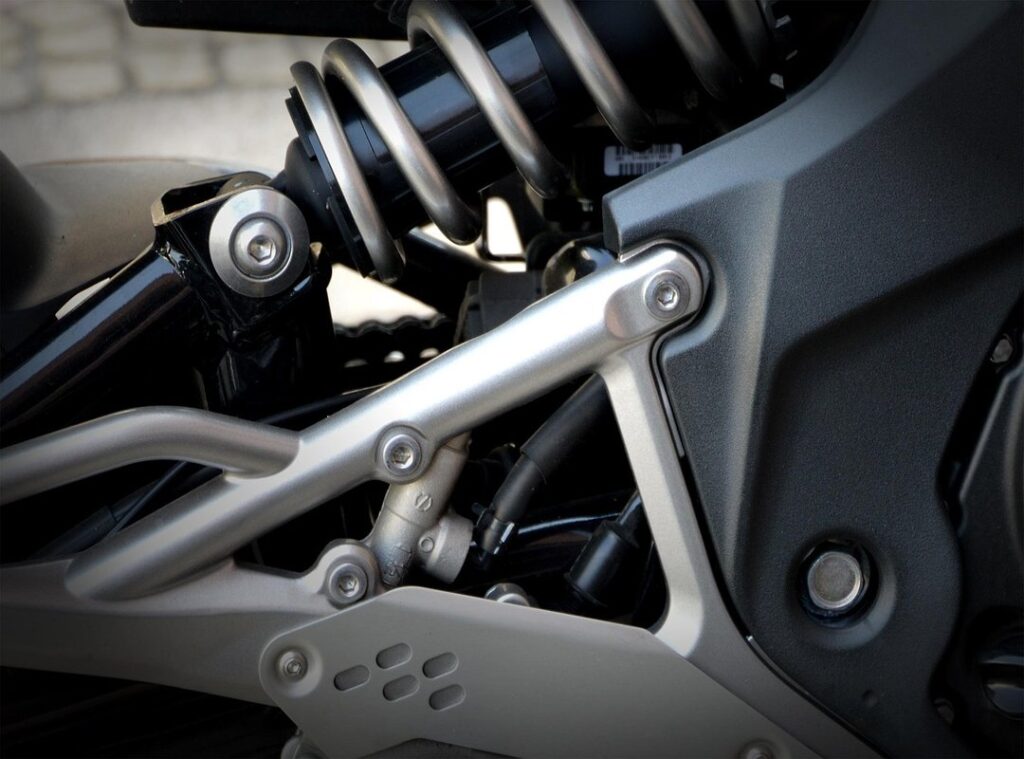
You know, the stuff that keeps you from flying off into a ditch. Forks up front and shock absorbers at the back do the heavy lifting. They’ve got springs and damping mechanisms doing a delicate dance to keep everything balanced.
Why bother with adjustments? Safety, comfort, and performance. Proper tuning means stability when you’re braking hard, less fatigue on long rides, and sharper cornering.
Ever felt like your bike’s steering is vague or it dives too much when you brake? That’s your suspension screaming for attention.
And let’s not forget comfort. Nobody likes feeling every pebble on the road like it’s a boulder. It’s like riding a pogo stick if things aren’t set right.
Here’s the kicker: one size does not fit all. Your weight, riding style, and the terrain you tackle matter. You can’t just set it and forget it.
Personalize those adjustments for a ride that feels just right. Got it? Good.
Now go tweak those settings like a pro.
Tuning Your Ride: Suspension Secrets
Let’s talk about preload. It’s all about setting the initial compression of the spring. Basically, it determines how your bike sits under its own weight and yours.
Too much preload? You lose suspension travel over bumps. Too little?
Your bike might sag like a sad balloon.
Next up, compression damping. This controls how fast the suspension compresses when you hit a bump or brake hard. Get it wrong, and you’re either bottoming out or bouncing like you’re on a pogo stick.
Adjusting it prevents that harsh bottoming out and keeps things smooth over obstacles.
Then there’s rebound damping. It controls how fast the suspension extends back after it’s compressed. Without proper adjustment, you risk the wheel packing down over bumps or pogo-sticking all over again.
You need to maintain tire contact for stability.
High-end systems might offer other tweaks like high-speed/low-speed compression. But that’s for the pros. For most of us, getting the basics right is key.
For those diving into more complex adjustments, consider Mastering Motorcycle Engine Overhauls. It’s a deep dive worth your time.
Motorcycle suspension tuning isn’t just about comfort; it’s about control. Get it right, and every ride feels like a victory lap.
Master Ride: Nailing Your Motorcycle’s Sag
Let’s talk sag. Not that kind of sag. I’m talking about your motorcycle’s.
You know, that key little adjustment that gets your suspension just right. Static sag is your bike’s natural droop (without you). Rider sag includes your heft (yes, with all your gear).
Why does it matter? Because getting the sag spot-on means your bike uses its suspension effectively. Compression and extension should be your new best friends.
Measure it. You’ll need a tape measure, pen, paper, and a buddy (or a very stable stand). Start from your axle to a fixed point on the fender.
Do this with the bike on a stand, on the ground, and then with you on it. Check this suspension setup guide for more detailed steps.
Aim for 25-30% sag for sportbikes, 30-35% for street, and a hefty 35-40% for off-road. Adjust preload using those collar rings or top caps. Make tiny adjustments (so you don’t overshoot).
Motorcycle suspension tuning isn’t a myth. It’s real. It’s technical.
And it’s your first step to a smoother ride. Got your tools ready? Great.
Let’s set that sag!
Fine-Tuning Your Ride: Compression and Rebound Damping
Let’s talk about clickers. They’re those nifty little adjusters on modern motorcycles that let us fine-tune suspension damping in small steps. It’s tempting to go wild, but less is more here.

Start with factory settings or go fully soft. Then, tweak one or two clicks at a time. Patience is key in motorcycle suspension tuning.
Here’s why we begin with rebound damping. It’s all about how your bike returns after a bump. Ever tried the “bounce test”?
Push down on your bike and watch how it rebounds. You want a smooth, controlled return. Not that jarring pogo-stick feel (I mean, who wants that?).
Once you’ve got it right, the ride feels like a dream.
Now, compression damping. Test it by riding over bumps and tuning for that sweet spot where it’s firm without being harsh. Adjust so it absorbs impacts effectively, without feeling like you’re riding a pogo stick or sinking into a swamp.
Always ride and feel it out after each adjustment (and take notes).
Curious about shifting too? Our topic on understanding motorcycle transmission has you covered. Keep testing and tweaking.
You’ll feel when it’s just right.
Beyond the Basics: Setup & Maintenance Essentials
Rider weight changes everything. Carrying a passenger or extra luggage? Time to rethink your suspension settings.
Your motorcycle isn’t a one-size-fits-all machine. Track day vibes differ wildly from a daily commute. I’ve felt the difference on twisty roads compared to city streets.
Believe me, your bike will tell you what it likes (or doesn’t).
Let’s talk road conditions. Smooth tarmac is a dream, but what about gravel or broken pavement? Adjustments might seem minor, but they’re key.
Tire pressure is another sneaky devil. Too often overlooked, yet impacts the handling like you wouldn’t believe. Trust me, the wrong tire pressure feels like you’re riding a brick.
Suspension health is non-negotiable. Regular services like fork oil changes and seal replacements keep performance up. I had an old shock once (thought) adjusting would help.
Nope, worn parts mimic bad settings. That’s why no amount of tinkering can fix a component on its last legs.
When should you call a pro? If adjustments fail to yield results or you spot leaks, it’s pro time. And if you’re seeking specialized tuning, don’t hesitate.
Remember, motorcycle suspension tuning isn’t just a hobby (it’s) an art. Treat it like one.
Tune Your Ride for Confidence
You came here for answers, and now you have them. A properly tuned suspension eliminates frustration and enhances your riding experience.
Motorcycle suspension tuning is not just about comfort; it’s about control, safety, and greater engagement with your bike.
Start with sag, make small adjustments, and test your setup. Don’t rush this process. Embrace the fine-tuning to really connect with your machine.
A well-tuned bike becomes an extension of you. It leads to confidence and enjoyment on every ride.
Why wait? Get started today and feel the difference. Your motorcycle deserves it.
 Sylrith Marrowlance is a contributor at FMB Motor Racing who specializes in racing highlights, performance vehicles, and automotive technology trends. Passionate about motorsport culture and engineering advancements, he creates engaging articles that keep readers informed about the latest developments in the racing world.